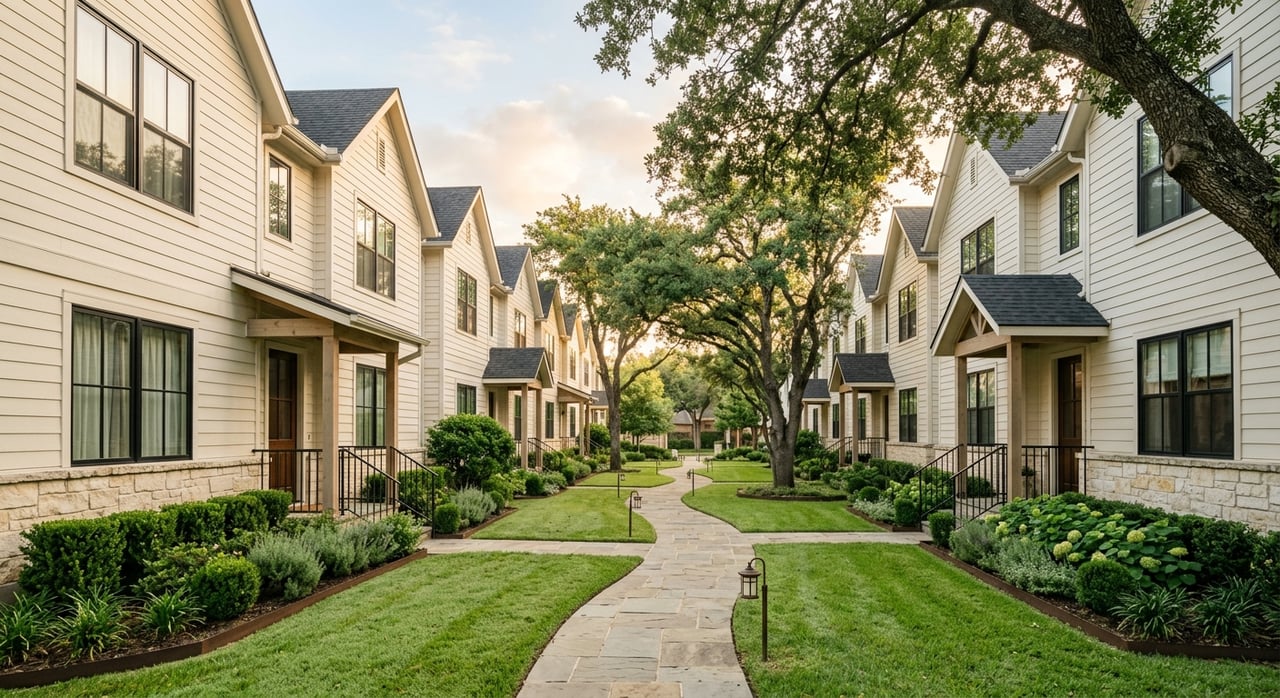
If you like the idea of homeownership in Cedar Park but do not love the thought of weekend yard work, a townhome or condo may be worth a closer look. Many buyers want a simpler day-to-day routine, easier upkeep, and good access to parks, commuting options, and daily conveniences. In Cedar Park, attached-home living can offer that balance, especially in a city with strong recreation resources and growing mixed-use areas. Let’s dive in.
Why Cedar Park Works for Attached Homes
Cedar Park sits on Austin’s northern border, about 17 miles from downtown, and the city describes itself as a major employment hub in the Austin metro. It also reports about 83,159 residents, 46 city-maintained parks, roughly 1,000 acres of parkland, and 34 miles of trails. For many buyers, that combination supports a lifestyle that feels connected without requiring a large lot to enjoy the area. You can learn more from the City of Cedar Park overview.
Attached-home living often makes sense when you want less exterior maintenance and easier access to work, recreation, and services. In Cedar Park, that tradeoff can be especially appealing if you would rather spend your time exploring trails, enjoying public amenities, or commuting efficiently than maintaining a yard.
The city’s growth also supports this shift. According to the city, the Bell District update highlights a 54-acre walkable mixed-use destination anchored by the public library and Bell Park. Cedar Park has also added mobility options through its LiNK microtransit pilot, including direct service to CapMetro’s Lakeline Station.
What Condo and Townhome Living Can Offer
A condo or townhome can be a practical fit if you want a lower-maintenance homeownership experience. The National Association of Realtors notes that HOAs and condo associations often help manage landscaping, neighborhood upkeep, routine maintenance, common areas, and reserve funds. Some communities may also include shared amenities like pools, fitness spaces, walking trails, or clubhouses, as explained in NAR’s consumer HOA guide.
That does not mean every community offers the same setup. Some may focus on exterior maintenance and basic shared spaces, while others include more amenities and more detailed rules. The key is understanding what you are paying for and how that aligns with your lifestyle.
In Cedar Park, public amenities can also add value beyond your home community. The city’s Recreation Center includes gymnasiums, cardio and weight areas, a walking and jogging track, group fitness, and child care. Bell Park and Brushy Creek Lake Park also provide trails, water access, natural space, and outdoor recreation that many buyers want close to home.
Cedar Park Lifestyle Benefits
One of the biggest advantages of a townhome or condo in Cedar Park is flexibility. If you travel often, work long hours, or simply prefer a more streamlined home, attached living can reduce the amount of exterior upkeep on your plate. That can make it easier to enjoy the city’s parks, trails, and events instead of managing constant maintenance.
Cedar Park also offers a strong mix of recreation and entertainment. The city-owned H-E-B Center hosts more than 130 events annually and seats up to 8,700 people, giving residents another local destination for concerts and events. When you combine that with parks, trails, and newer mixed-use areas, attached-home buyers may find they can rely more on nearby amenities and less on private yard space.
This can be a good fit for several types of buyers, including first-time buyers, downsizers, busy professionals, and some investors. The right match depends less on age or life stage and more on how you want to live, what kind of maintenance you want to handle, and how you plan to use the property over time.
Understand HOA and Condo Rules
Before you buy a condo or townhome in Cedar Park, association documents deserve careful attention. The Texas State Law Library explains that sellers must disclose whether they are aware of HOA or maintenance fees or assessments, and buyers may request a resale certificate and governing documents. It also notes there is no Texas state agency that oversees property owners’ associations, which makes your review process especially important. See the Texas State Law Library HOA guide.
NAR’s consumer guide explains that association rules often address topics such as landscaping, noise, parking, pets, exterior changes, and common-area use. These rules can shape your daily experience more than buyers expect at first. A community might be a great fit for one buyer and a poor fit for another simply because of how the rules line up with their priorities.
As you compare options, ask direct questions about:
- Monthly, quarterly, or annual dues
- What the dues actually cover
- Reserve funding
- Any recent or planned special assessments
- Parking policies
- Pet rules
- Exterior modification limits
- Leasing restrictions or approval requirements
Texas Condo Disclosures Matter
Texas law gives condo buyers important documents to review. Under Texas Property Code Chapter 82, a seller must furnish a current copy of the declaration, bylaws, association rules, and a resale certificate prepared no earlier than three months before delivery. Those documents help you verify the legal and financial structure of the property you are buying.
This step matters because the marketing label alone does not tell the full story. A home may be described casually as a condo or townhome, but the declaration, bylaws, and resale certificate are what clarify ownership, obligations, and restrictions. Texas law also treats assessments as the unit owner’s personal obligation and secures them with a lien on the unit.
In simple terms, you want to know exactly what you own, what the association maintains, and what costs could change after closing. That is one of the most important parts of buying an attached home in Cedar Park.
Budget Beyond the Purchase Price
A condo or townhome can simplify maintenance, but your budget should include more than the mortgage payment. HOA dues are part of the real cost of ownership, and they may change over time depending on maintenance needs, reserves, and community decisions. NAR notes that dues can also support reserve funds or special assessments, so it is smart to understand both current costs and future risk.
Financing deserves attention as well. The Consumer Financial Protection Bureau, as cited in the research context, notes that lenders can sometimes charge slightly more for loans to buy a condo than for some other property types. That does not mean condos are the wrong choice, but it does mean you will want to confirm how the property is classified and how that affects financing, insurance, and monthly costs early in the process.
A practical ownership budget should account for:
- Mortgage payment
- HOA dues
- Insurance responsibilities
- Property taxes
- Utilities
- A cushion for dues increases or special assessments
Consider Long-Term Fit
The best attached-home purchase is not just about today. It should also support how you may want to use the property in the future. If you expect to stay for several years, think about whether the layout, stairs, parking, storage, and community rules will still work for you later on.
If you may turn the property into a rental one day, leasing rules become critical. Association documents can set minimum lease terms, rental caps, parking requirements, or approval steps for landlords and tenants. Those details vary by community, so it is important to verify them before you buy rather than after.
Cedar Park’s broader market may also give buyers room to compare options carefully. Realtor.com described Cedar Park as a buyer’s market in February 2026, with 239 homes for sale and a median 45 days on market citywide, according to the research provided. While that is not specific to condos or townhomes, it suggests you may have time to evaluate the tradeoffs and negotiate thoughtfully.
A Smart Way to Compare Communities
When you tour Cedar Park townhomes and condos, it helps to compare each option through the same lens. That keeps you focused on the factors that affect everyday ownership, not just first impressions.
Use a checklist like this:
- How much exterior maintenance is handled by the association
- Whether dues match the level of service provided
- The condition of common areas
- Access to parks, trails, and commuting routes
- Parking convenience
- Guest parking availability
- Rules that may affect pets, rentals, or updates
- Whether the home supports your long-term plans
This kind of side-by-side review can make your decision clearer. A lower price does not always mean a better fit if the dues, rules, or maintenance responsibilities are less favorable.
Making the Right Choice in Cedar Park
Cedar Park townhome and condo living is really about tradeoffs. You may give up some yard space, but gain easier upkeep, access to shared amenities, and proximity to a city with extensive parks, trails, recreation, and growing mixed-use destinations. For many buyers, that is a smart exchange.
The most important step is doing your homework on the association, the documents, and the full monthly cost of ownership. If you want help comparing Cedar Park attached-home options and understanding how they fit your goals, Sage Space RE can help you make a clear, informed move.
FAQs
What is the difference between a condo and a townhome in Cedar Park?
- In general, condos typically include ownership of the unit plus an ownership interest in common areas, while townhome ownership structure can vary by community. The governing documents and resale certificate are the best place to confirm what you own and what the association maintains.
What should you review before buying a Cedar Park condo?
- You should review the declaration, bylaws, association rules, resale certificate, dues, reserve funding, any special assessments, and any restrictions that affect pets, parking, rentals, or exterior changes.
Are HOA fees common in Cedar Park townhome communities?
- Yes, HOA or association fees are common in many attached-home communities, and they may help cover items like landscaping, routine maintenance, common areas, amenities, and reserves.
Can you rent out a condo or townhome in Cedar Park later?
- It depends on the community’s rules. You should verify leasing policies, rental caps, minimum lease terms, parking rules, and any approval process before you buy.
Why do Cedar Park townhomes and condos appeal to buyers?
- They can appeal to buyers who want lower exterior maintenance, predictable shared upkeep responsibilities, and access to Cedar Park amenities like parks, trails, recreation, and commuting connections.