When you look at homes in Travis Heights, one thing stands out fast: there is no single “Travis Heights style.” On one block, you might see a bungalow with deep eaves and original windows. A few doors down, there may be a ranch home, a mid-century design, or newer infill on a sloped lot. If you are buying, selling, or updating a home here, that architectural mix matters more than you might think. Understanding how style, condition, lot characteristics, and historic review work together can help you make smarter decisions about value. Let’s dive in.
Why architecture matters in Travis Heights
Travis Heights developed over more than a century, and that history shows up in the housing stock today. According to historic district materials and neighborhood history, the area includes styles ranging from late-1800s Victorian homes to ranch, mid-century modern, and contemporary houses. Because the neighborhood developed in waves, homes can vary widely from block to block in age, size, lot shape, and architectural character.
That variety changes how buyers compare homes. In many neighborhoods, buyers are weighing similar floor plans against each other. In Travis Heights, they are often comparing different eras, levels of originality, lot usability, and how well a home fits its setting. That means architecture is not just about appearance. It is part of how buyers judge desirability and long-term value.
The neighborhood also includes the Travis Heights-Fairview Park Historic District, which was listed on the National Register in 2021. In Austin, contributing properties in historic districts and National Register districts may require historic review for exterior alterations, additions, permanent site work, signs, and new construction. For owners, that means design choices can affect not only market appeal but also what changes are feasible.
The main home styles buyers notice
Bungalows and Craftsman homes
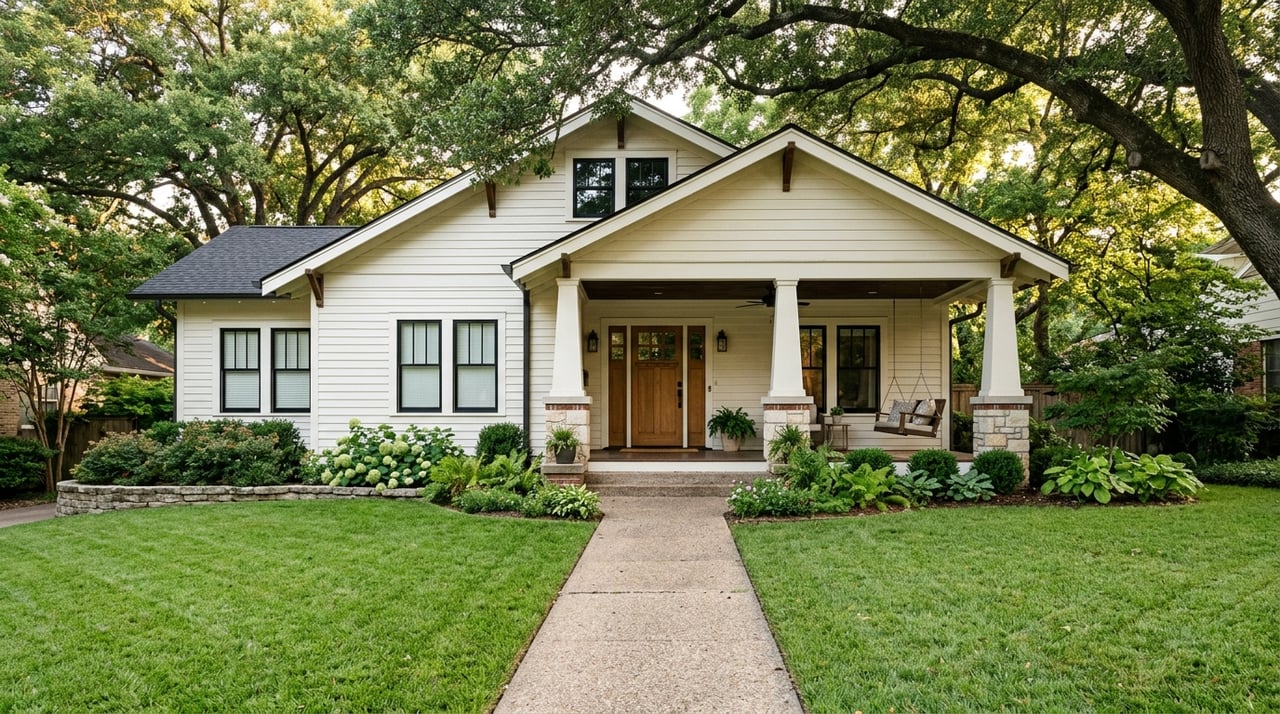
Bungalows are a common housing form in older parts of Travis Heights, and many include Craftsman-style details. Austin’s design standards describe bungalows as typically one story or one-and-a-half stories with a front yard and often a detached garage. Craftsman details can include tapered porch piers, deep eaves, exposed rafter ends, and wood-sash windows with geometric detailing.
In this part of Austin, buyers often respond to homes that still look true to their original design. When proportions, materials, and key details remain intact, the house tends to feel more authentic. By contrast, heavily altered homes can lose some of the visual coherence that makes these properties stand out.
That matters because local design standards discourage mixing in features from a different era. For example, adding Victorian-style trim to a Craftsman bungalow may work against the original architecture rather than support it. If you are preparing to sell, preserving the home’s architectural identity can help buyers see the value more clearly.
Ranch and mid-century homes
Travis Heights also includes ranch, mid-century, Moderne, and International-style homes. Austin’s standards describe ranch houses as low-profile homes with open living spaces, minimal ornament, large windows, and attached or integral garages. Mid-century styles are also defined by clean lines, low ornament, and in some cases flat roofs or rounded forms.
These homes can attract strong interest when their original massing and overall design remain legible. Buyers who are drawn to this architecture often want updates that improve comfort and function without erasing what makes the home distinctive. A remodel that respects the structure’s lines, scale, and materials usually feels more successful than one that forces a different style onto the house.
That does not mean every home needs to be untouched. It means the updates should feel compatible. In Travis Heights, compatibility often reads as confidence, while mismatched remodeling can make buyers question both design quality and future maintenance.
Newer infill and contemporary homes
Newer construction in Travis Heights usually competes on fit, finish, and site design rather than historic character. Even so, newer homes do not exist in a vacuum. In historic and National Register districts, Austin’s review rules apply to new construction, and the city’s standards call for compatible materials, roof forms, windows, doors, and garage placement.
Those standards also discourage features like projecting front garages or front-yard fences that block the primary structure. In practical terms, buyers often notice whether a newer home feels thoughtfully placed on its lot and consistent with the rhythm of the block. A new build that feels oversized or disconnected from its surroundings may not land as well as one that responds to the street and topography.
Site constraints matter here too. In Travis Heights, sloping lots and heritage trees can shape setbacks and building footprints. So even among newer homes, value can be influenced by how well the design works with the lot instead of fighting it.
The value drivers beyond style alone
Architecture matters, but it is only part of the story. In Travis Heights, buyers are usually looking at a combination of style, condition, lot quality, and usability. Two homes may look similar online but perform very differently once buyers understand how each property sits on the lot and how well it has been maintained.
Condition still drives pricing
Condition is one of the clearest value levers for any home, and current buyer behavior reflects that. In the 2025 Remodeling Impact Report, 46% of REALTORS® said buyers are less willing to compromise on condition. The most commonly recommended pre-listing projects were painting the entire home, painting one room, and new roofing.
That tells you something important if you are getting ready to sell in Travis Heights. Buyers may appreciate historic charm or architectural pedigree, but they still notice deferred maintenance first. A beautiful bungalow with worn paint or visible roof issues may lose momentum quickly, even in a character-rich neighborhood.
The same report found strong cost recovery for projects like a new steel front door, closet renovation, and new fiberglass front door. Kitchen upgrades, roofing, and bathroom renovations also ranked among areas with strong recent demand. For many sellers, the best strategy is not a dramatic overhaul. It is targeted work that improves condition and presentation while respecting the home’s original form.
Lot characteristics can shift value fast
In Travis Heights, the lot can be nearly as important as the house itself. Fairview Park was originally planned around hilly terrain, creeks, city views, and large irregular lots. Over time, some lots were subdivided into smaller parcels, which helps explain why homes with similar square footage can have very different appeal.
Buyers often react strongly to slope, privacy, usable yard space, tree canopy, and expansion potential. A home on a flatter, more usable lot may appeal to a different buyer than one on a dramatic hillside site with views. Neither is automatically better, but each has a different market story.
This is especially important when you price a home. A visually similar property down the street may not be the right benchmark if the lot has a different grade, more privacy, fewer tree constraints, or more functional outdoor space. In Travis Heights, architecture and site conditions work together to shape value.
Why sympathetic updates often protect value
If you own a home in Travis Heights, you may wonder which improvements are worth making before you sell. The safest answer is often the simplest one: improve condition without erasing character. In a neighborhood where buyers pay attention to architecture, updates usually perform best when they feel appropriate to the house.
Austin’s standards emphasize compatibility in exterior materials, roof shapes, windows, doors, garages, and fences. That makes sympathetic updates especially important for homes in or near historic contexts. A project that improves function and curb appeal while staying true to the home’s design is more likely to support value than a trend-driven remodel that ignores the original structure.
For sellers, that might mean focusing on:
- Fresh paint where needed
- Roofing updates if age or wear is visible
- Front entry improvements
- Repairs to original features that still add character
- Exterior changes that remain consistent with the home’s style
For buyers, this is also useful lens for evaluating a property. When a home has been updated thoughtfully, it often signals care and better decision-making over time. When finishes and exterior changes feel disconnected from the architecture, you may want to look more closely at the quality and scope of the work.
Historic review and what owners should know
In Travis Heights, remodeling is not always as simple as choosing a contractor and getting started. Austin’s Historic Preservation Office states that contributing properties in historic districts and National Register districts require historic review for exterior alterations, additions, permanent site work, signs, and ground-up new construction.
That does not mean change is impossible. It means owners should plan carefully and understand the review process before committing to a design direction. This can affect project timing, cost, and what options are realistic for your lot and structure.
If you are selling, this can also shape how buyers view future potential. A buyer may love the location and architecture, but they may also want clarity about what can be expanded or altered. Clear guidance around those issues can make a property easier to understand and easier to position in the market.
What current market context suggests
Recent market data reinforces just how much architectural style and site details matter in Travis Heights. Spring 2026 data showed a wide spread in pricing. One neighborhood snapshot reported a median sale price of $926,000, a median sale price per square foot of $504, and 79 days on market for Travis Heights. A separate April 2026 snapshot for the Travis Heights-Fairview Park Historic District showed a median listing price of $1.4 million, $813 per square foot, and 27 days on market.
Those numbers are not directly interchangeable, but they do point to the same conclusion: this is not a one-note market. Home value can move significantly based on architecture, lot conditions, historic context, and the quality of updates. In a broader Austin market that was reported as a buyer’s market in March 2026, those differences can matter even more.
For sellers, that means pricing should go beyond square footage and bedroom count. For buyers, it means understanding why two homes in the same neighborhood can command very different reactions and price points. In Travis Heights, value is often tied to the details that make a home feel specific to its place.
If you are thinking about selling, buying, or updating a home in Travis Heights, it helps to look beyond broad neighborhood averages. You want to know how architecture, lot constraints, condition, and historic context intersect on your specific property. That kind of hyperlocal perspective can make the difference between guessing and planning well. When you want neighborhood-specific guidance rooted in South Austin experience, Sage Space RE is here to help.
FAQs
How does architecture affect home value in Travis Heights?
- Architecture affects how buyers compare homes in Travis Heights because the neighborhood includes many styles, eras, and lot types. Homes that retain their architectural identity and fit well with their setting often stand out more clearly in the market.
Do historic homes in Travis Heights always sell for more?
- No. Historic character can add appeal, but value depends on several factors, including condition, lot quality, originality, and whether updates feel compatible with the home’s architecture.
What home updates are usually worth it before selling in Travis Heights?
- The most practical pre-listing projects often include paint, roofing improvements, and selective exterior updates. Projects that improve condition without removing original character are usually the safest approach in this neighborhood.
Can you remodel a home freely in Travis Heights?
- Not always. Austin requires historic review for exterior alterations, additions, permanent site work, and new construction for contributing properties in historic districts and National Register districts.
Why do similar homes in Travis Heights have different values?
- Similar homes can vary in value because of lot slope, privacy, tree canopy, usable yard space, expansion potential, condition, and how well the architecture has been preserved or updated.
What matters more in Travis Heights: the house or the lot?
- Both matter, and they often work together. In Travis Heights, lot characteristics like topography, views, and usability can influence buyer interest almost as much as the home’s architecture and condition.