Do you picture morning runs on the lake trail, coffee on South Congress, and a short hop to downtown? If that sounds like your pace, Travis Heights might be on your shortlist. At the same time, you may be weighing weekend crowds, older homes, and block-by-block walkability. In this guide, you’ll learn what life here really feels like, where the trade-offs show up, and how to tell if the neighborhood matches your priorities. Let’s dive in.
Location and feel
Travis Heights sits immediately south of Lady Bird Lake in South Austin. The area is generally bounded by the lake to the north, Congress Avenue to the west, I‑35 to the east, and Oltorf Street to the south, with the older Fairview Park subdivision in its western portion. You are close to downtown and tucked behind the activity on South Congress. For a quick primer on boundaries and background, see the neighborhood overview on Wikipedia.
Historic district basics
A portion of the neighborhood is promoted as the Travis Heights–Fairview Park historic district. A National Register listing recognizes the area’s significance and signals a high concentration of older homes. Local historic‑district overlays, where applied, can add design review for visible exterior changes. If you plan to remodel or build, review the local preservation group’s resources at historictravisheights.org and expect more oversight on streets within the overlay.
Daily life: walkability, trails, dining
Walkability depends on your block
Walkability in Travis Heights varies by address. Sample Walk Score pages for Travis Heights Boulevard show scores in the low 60s, which is “Somewhat Walkable.” Blocks closer to South Congress and trailheads tend to score higher because they are steps from shops and the lake loop. If walkability is a priority, check the specific address on Walk Score instead of assuming a single score for the whole area.
Trails and green space nearby
Travis Heights borders the Ann and Roy Butler Hike‑and‑Bike Trail around Lady Bird Lake. The Trail is a major car‑free connector used for running, biking, and commuting, which makes daily outdoor time simple and routine. The Trail Conservancy maps and stewards these connections, so you can explore access points and amenities on their site. Inside the neighborhood, Stacy Park and the Blunn Creek Preserve add shaded paths and creek‑side pockets that feel quiet and natural. You can read more about these green spaces through the neighborhood preservation group at historictravisheights.org.
SoCo access, energy, and trade‑offs
South Congress Avenue is the neighborhood’s commercial front door, not its main residential street. You get a deep bench of restaurants, music venues, and shops within a short walk. On weekends and during events, you will notice more foot traffic, street activity, and parking pressure near the corridor and trailheads. The city has studied curb use and event impacts in this area, which you can see in public meeting materials on Austin’s meeting portal.
Getting around
Transit and short commutes
CapMetro routes run along nearby South Congress, Riverside, and Oltorf, with service quality that varies by route and time of day. Many residents choose short drives or use the lakeside trail for bike commutes. For route‑level transit details, tools like Moovit can help you evaluate options from a specific address.
Driving and biking
Because the neighborhood is central, trips to downtown are short by distance, although rush hour can stretch drive times. If you prefer to avoid peak‑hour driving, the Butler Trail’s continuous loop gives you a reliable bike connection into downtown and adjacent districts. Explore route maps and trailheads through The Trail Conservancy.
Homes and streetscape
Architectural mix and lot patterns
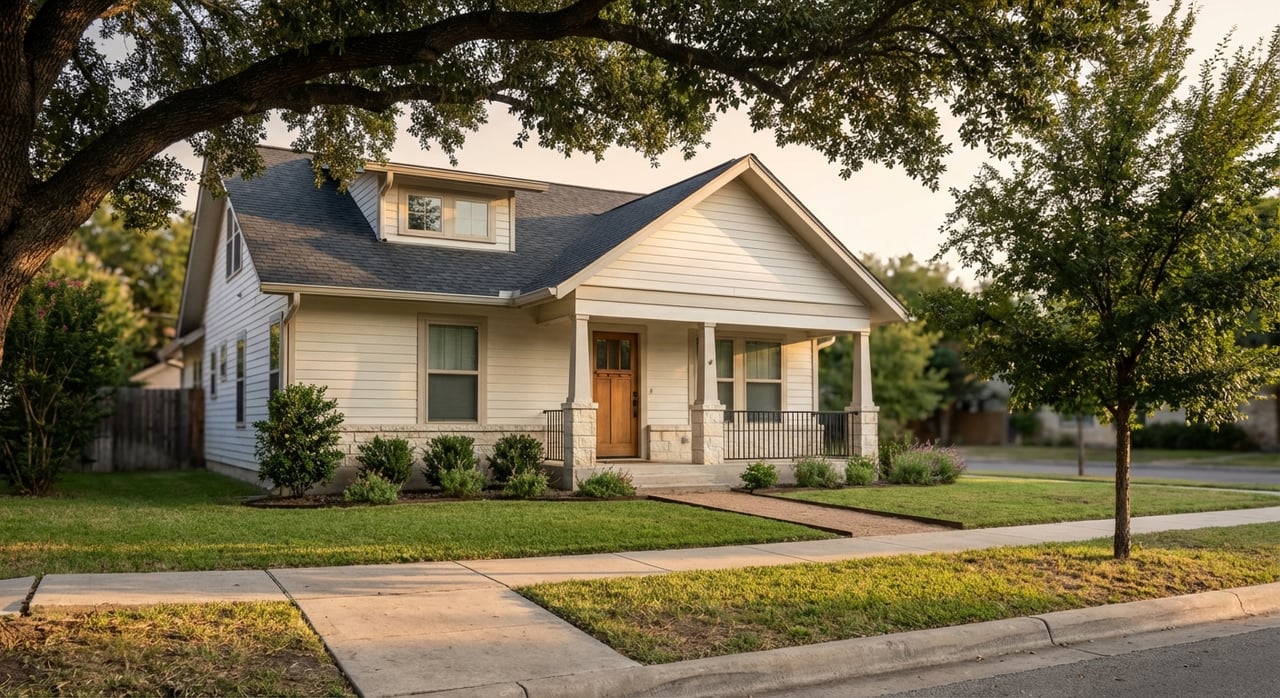
You will find a wide mix of homes here. Expect late‑19th and early‑20th‑century cottages and Craftsman bungalows, mid‑century houses, and modern infill. Many blocks are tree‑lined with mature oaks and some hillside topography, which creates a varied streetscape and smaller central‑Austin lot sizes compared with suburban tracts. The neighborhood preservation group highlights this variety and context at historictravisheights.org.
Infill and renovation activity
Redevelopment is active and visible. Historic Landmark Commission records show regular applications for demolitions, additions, and new construction within the National Register district and surrounding blocks. Where a local historic overlay applies, exterior work faces design review, which can shape timelines and design choices. You can see examples of docketed projects in the city’s records, such as this commission agenda.
Is Travis Heights a fit? Quick checklist
Strong fit if you want:
- Daily access to the Butler Trail and Lady Bird Lake.
- Walkable proximity to South Congress dining, music, and shops.
- A central location with short trips to downtown.
- Diverse historic housing, with room for thoughtful renovation.
- Smaller lots, tree cover, and a mix of old and new architecture.
Less good fit if you need:
- A large, level yard or a more rural, private setting.
- Guaranteed quiet and easy on‑street parking every weekend.
- A strictly suburban feel with cul‑de‑sacs and uniform new builds.
- A neighborhood with little to no nearby redevelopment activity.
Practical next steps for any property you like:
- Check parcel‑level flood maps, especially near Blunn Creek or lower lake elevations, using resources linked from Austin Outside.
- Verify walkability and transit by the specific address with Walk Score and route tools like Moovit.
- Review recent permits on neighboring lots to understand potential construction nearby, referencing Historic Landmark Commission records.
- Note on‑street parking rules and distance to South Congress or trailheads if evening quiet is a priority, and explore city curb‑use studies via Austin’s meeting portal.
Nearby comparisons in plain terms
- Bouldin Creek: Similar lake and SoCo access with a few pockets that feel more urban along South First and South Congress. If you like Travis Heights but want slightly different micro‑blocks, Bouldin is a close cousin.
- Zilker: Centers on Zilker Park and Barton Springs. If big green space at your doorstep is the top priority, Zilker often takes the lead, while Travis Heights feels a bit more tucked into residential streets behind SoCo.
- South Lamar: A linear corridor with restaurants, bars, and more mid‑rise housing. If you want a broader mix of condos and apartments along a main avenue, South Lamar offers different options and a corridor vibe.
Use these contrasts to narrow your search by three axes: how close you want to be to heavy commercial activity on SoCo, how important direct adjacency to a major park is, and whether you prefer quieter interior streets or corridor‑side convenience.
Practical considerations before you buy
Floodplain and creek‑side lots
Parts of Travis Heights sit within the Blunn Creek watershed and near lake elevations. Do not rely on neighborhood‑level generalizations. Always check parcel‑level flood maps and watershed information to plan for insurance and any construction constraints. You can start with resources aggregated by Austin Outside.
Parking and event patterns
Proximity to South Congress, Auditorium Shores, and trail access points can bring weekend and event‑related congestion, plus higher curb demand. If evening quiet and on‑street parking are must‑haves, focus on interior streets or properties with off‑street parking. For background on city efforts to manage curb use around busy areas, review Austin’s public parking strategy discussions.
Preservation and project planning
If you plan to renovate, confirm whether a local historic overlay applies to your block. National Register recognition does not by itself prevent demolition by private owners, but local overlays can add design review and shape what is allowed on the exterior. The neighborhood preservation site at historictravisheights.org outlines the distinctions and expectations.
Ready to decide if Travis Heights is the place you want to come home to? Get block‑level guidance, from lifestyle fit to permitting paths and staging strategy, with a calm, boutique process that meets you where you are. Connect with Sage Space RE to schedule a neighborhood consultation.
FAQs
Is Travis Heights walkable for everyday errands?
- Walkability varies by block, with addresses closer to South Congress and trailheads rating higher; sample Walk Score pages for Travis Heights Boulevard show “Somewhat Walkable” scores in the low 60s.
What is the difference between the National Register district and a local historic overlay in Travis Heights?
- A National Register listing recognizes significance but does not by itself control private demolition, while local historic overlays add design review for exterior changes, as outlined by historictravisheights.org.
How close is Travis Heights to the Butler Trail and Lady Bird Lake?
- The neighborhood sits immediately south of the lake with near‑immediate access to the Ann and Roy Butler Hike‑and‑Bike Trail, a primary car‑free connector managed by The Trail Conservancy.
What should I know about parking and weekend traffic near South Congress?
- Streets nearest South Congress and trailheads see more weekend foot traffic and curb demand; Austin has studied curb management in this area, with materials posted on the city’s meeting portal.
Are there floodplain concerns near Blunn Creek in Travis Heights?
- Some parcels near Blunn Creek and lower lake elevations may have flood considerations; always check parcel‑level maps and watershed resources such as those linked by Austin Outside.