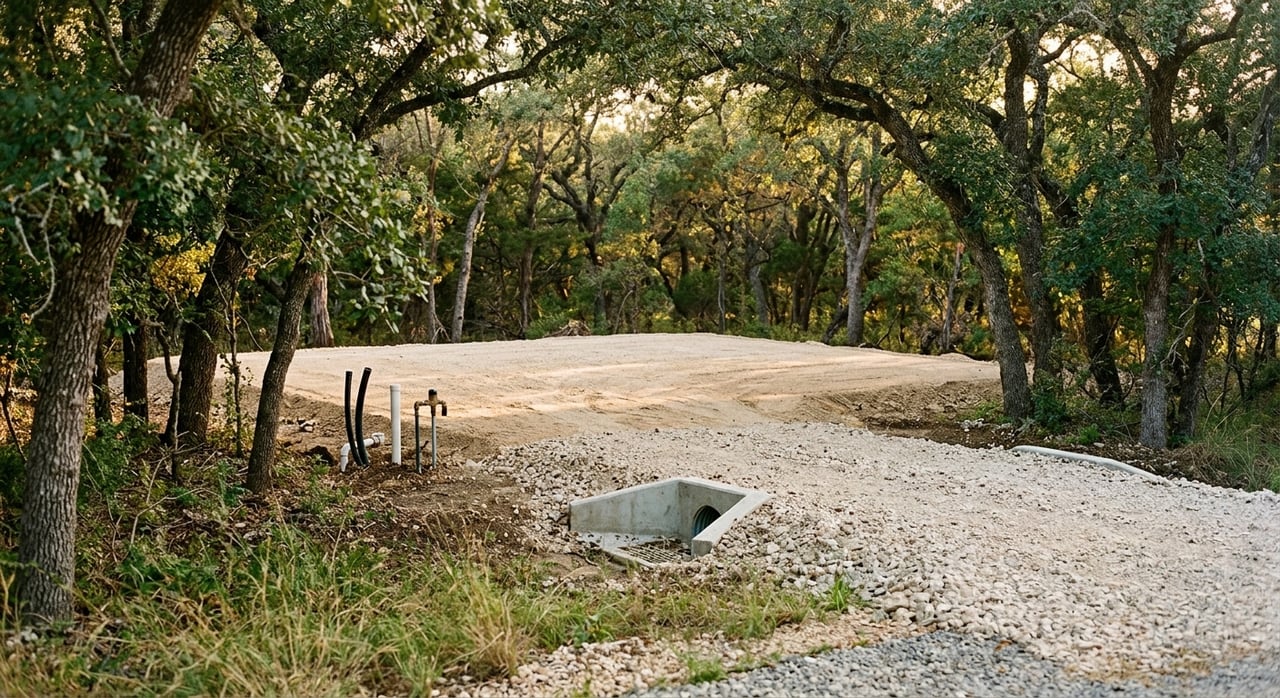
Thinking about buying land in Wimberley? It can be an exciting way to create a home or investment plan that fits your goals, but raw land often comes with more moving parts than buyers expect. Before you fall in love with a view or a price, it helps to understand how jurisdiction, access, utilities, restrictions, and timelines can shape what you can actually do with a property. Let’s dive in.
Start With Jurisdiction
One of the first things to confirm is where the tract is located from a regulatory standpoint. In the Wimberley area, land may be inside the City of Wimberley, inside the city’s extraterritorial jurisdiction, or in unincorporated Hays County.
That distinction matters because the review process can change depending on location. The City of Wimberley handles topics like zoning, conditional uses, floodplain development, and subdividing within its authority, while Hays County handles many unincorporated development matters, including on-site sewage facilities, floodplain review, addressing, and transportation permits.
It is also important to know that city map data are for general reference only and are not survey quality. If a property line, city-limit question, or ETJ boundary affects your plans, you will want survey and title confirmation before moving forward.
Confirm Road Access Early
Access is one of the biggest practical issues in a land purchase. A parcel may look straightforward online, but you still need to verify how you legally and physically reach it, and whether the road is publicly maintained or private.
Hays County can help confirm whether a road is county-maintained and can direct you to road maintenance contacts. Right-of-way information may also be available through the County Clerk, which can help you understand whether your access route is properly documented.
If the road is private, maintenance can become a major budget and ownership issue. In Texas, counties generally may not repair or maintain private roads, so owners or a homeowners association may be responsible unless the road has been dedicated or falls under an exception.
Why Private Roads Matter
A private road can affect more than your day-to-day driving experience. It may influence financing, construction planning, and future resale.
Before you buy, ask questions like:
- Is the road county-maintained or private?
- Is there recorded legal access to the parcel?
- Who pays for maintenance and repairs?
- Will a future driveway or road improvement need county review?
- If the land is being developed, will any road work need to meet county standards during platting?
Understand Utilities Before You Close
In Wimberley, utility service is not one-size-fits-all. That means you should never assume that a parcel has simple or immediate access to water, wastewater, or electric service.
The City of Wimberley notes that it owns only the Central Wimberley Wastewater System. For other service questions, buyers may need to coordinate with providers such as Pedernales Electric Cooperative, Wimberley Water Supply Corporation, or Aqua Texas, depending on the property.
If a parcel can connect to city sewer, the city requires an application and says no connection may be made before the application, fee, and extension requirements are met. That is a useful reminder that “nearby sewer” does not always mean “ready to connect.”
Water Service and Well Questions
If the property is served by Wimberley Water Supply Corporation, service details matter. WWSC’s 2024 Consumer Confidence Report states that it provides groundwater from the Trinity Aquifer in Hays County, and WWSC also notes that additions or new habitable structures can trigger a water-service reclassification or additional service needs.
If you are planning on a well instead, there is another layer of review. The Hays Trinity Groundwater Conservation District requires well-construction notification confirmation before drilling begins, and it may temporarily stop accepting new non-exempt well construction notifications and operating-permit applications during Stage 3 or Stage 4 drought conditions.
That means your build plan and timeline may depend on water access rules well before construction starts.
Septic and Floodplain Review Are Core Due Diligence Items
Many land buyers focus on views, acreage, and price first. In Wimberley, septic and floodplain review deserve equal attention.
For unincorporated land, Hays County requires permits for on-site sewage facilities. The county notes that administrative review can take several business days before technical review and permit issuance, so septic planning should start early.
Floodplain review is also broader than some buyers expect. Hays County requires a floodplain permit for all development, whether the property is inside or outside the floodplain, and the county notes that flood risk can extend beyond land immediately beside a creek or river.
Steep Slopes Can Add Another Step
If the parcel is inside city limits and the site is steep, the City of Wimberley may require more review before building. For residential projects on slopes over 15 percent, the city requires site plan review before a building permit is issued. The city also requires site plan review for all commercial projects.
This does not mean a steep lot cannot work. It does mean your site conditions can affect cost, design, and timing.
Check Plats, Deed Restrictions, and Zoning
A common land-buying mistake is assuming that one document tells the full story. In reality, private restrictions and public regulations are separate layers, and both can shape what you can do with a parcel.
Deed restrictions are legal agreements that can govern property use and the kind, character, and location of buildings or other structures. They may appear in recorded subdivision documents or in later deeds, so recorded records matter.
Hays County’s County Clerk maintains official public records, including deeds and liens. Hays County Development Services also notes that a plat is the legal document that establishes a property’s boundaries and any restrictions or covenants tied to the parcel.
How to Tell if Land Is Probably Platted
Hays County offers a helpful rule of thumb when reviewing a legal description. If the description uses terms like Subdivision, Phase, Section, Block, or Lot, the property is probably platted.
If the legal description uses Survey or Abstract, it is probably not platted. That matters because raw land may require a plat application, while some lots in already platted subdivisions may not.
Inside city limits, zoning is another key step. The City of Wimberley has multiple zoning districts, and some uses require a conditional use permit with public hearings before the Planning and Zoning Commission and City Council.
Build a Realistic Timeline
Land purchases often look simple at the offer stage and become more layered once due diligence begins. In Wimberley and Hays County, the process can involve several sequential reviews rather than one quick permit.
Hays County says a development coordinator is the ideal place to begin. Smaller projects may only need a one-on-one consultation, while larger ones may require a pre-application or pre-development meeting.
Platting timelines depend on the scope of the project and how quickly comments are addressed and resubmitted. On the city side, Wimberley says a residential building permit is typically issued in about seven days, while commercial permits are typically issued in ten to fourteen days, and permits generally expire after 180 days if no inspections are made.
The key point is that one approval rarely means every step is complete. The city also notes that other agency approvals may still be needed after the initial submittal.
A Smart Wimberley Land-Buyer Checklist
Before you buy land in Wimberley, try to confirm these items as early as possible:
- Whether the parcel is in the city, the ETJ, or unincorporated Hays County
- Survey and title confirmation for boundaries and access questions
- Whether the road is county-maintained or private
- Right-of-way and recorded legal access
- Electric, water, wastewater, or well feasibility
- Septic requirements for unincorporated property
- Floodplain review requirements
- Slope-related review if the site is inside city limits
- Whether the tract is platted or may require platting
- Recorded deed restrictions, covenants, and liens
- Zoning and any conditional use requirements if inside city limits
- A realistic timeline for permits, utility coordination, and development review
Why Local Guidance Helps
Buying land in Wimberley can be rewarding, but it usually takes more than comparing acreage and price per square foot. The most successful buyers treat the process like a sequence of checks: jurisdiction, access, utilities, restrictions, and timing.
That is especially true if you are deciding between raw land and an existing home, or if you hope to build soon after closing. Calendar risk, review requirements, and utility questions can be just as important as the purchase price.
If you want help evaluating a parcel, comparing land options, or weighing a land-plus-build path against an existing home, Sage Space RE can help you move forward with clear, local guidance.
FAQs
What should you check first before buying land in Wimberley?
- First, confirm whether the property is inside the City of Wimberley, inside the city’s ETJ, or in unincorporated Hays County, because that affects zoning, permitting, floodplain review, and development oversight.
Why does road access matter when buying land in Wimberley?
- Road access affects whether you have legal entry to the property, whether the road is publicly maintained or private, and whether future driveway or road improvements may need county review.
Do all Wimberley land parcels have utility service available?
- No. Utility service in Wimberley is mixed, so you should verify electric, water, wastewater, or well options for the specific parcel rather than assume service is available.
What do you need to know about septic systems for land in Hays County?
- For unincorporated land, Hays County requires permits for on-site sewage facilities, and the review process can include administrative and technical steps before permit issuance.
How can you tell if a Wimberley-area tract is already platted?
- Hays County says legal descriptions using terms like Subdivision, Phase, Section, Block, or Lot are probably platted, while descriptions using Survey or Abstract are probably not.
Can floodplain rules affect land outside a mapped floodplain in Hays County?
- Yes. Hays County requires a floodplain permit for all development, inside or outside the floodplain, and notes that flood risk can extend beyond land directly beside a creek or river.